
The Healthcare Industry Doesn’t Need More Content. It Needs More Discernment.
Every brand is publishing something, producing something, or demanding something.
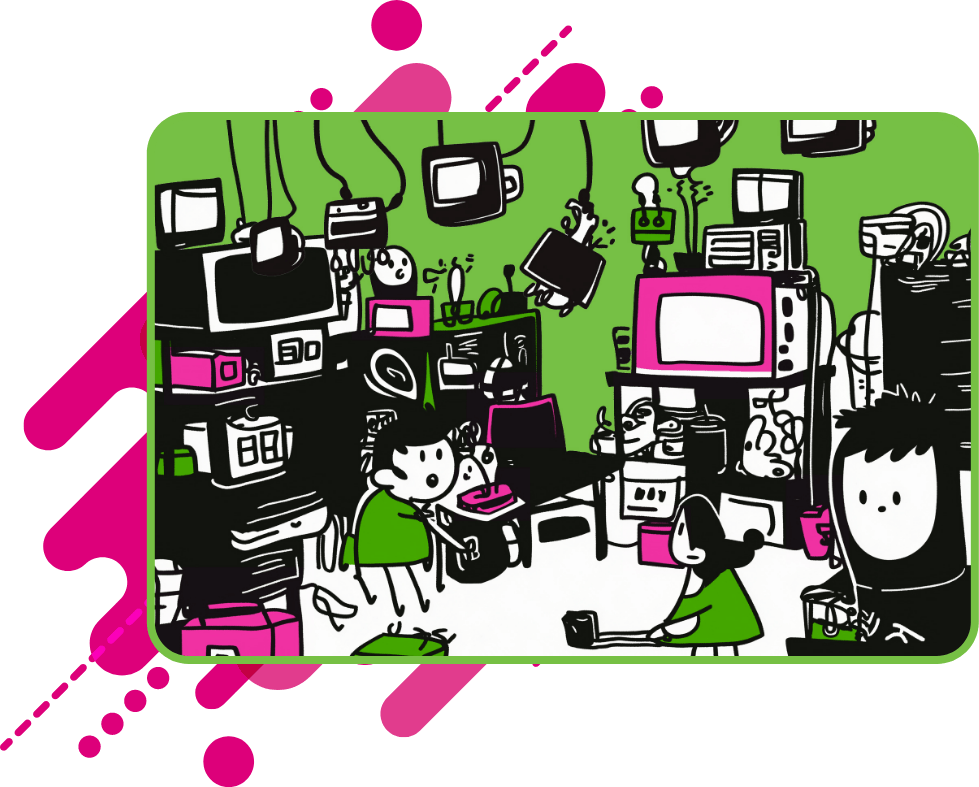
Videos. Blogs. Social posts. Thought leadership. Emails. Carousels. Reels. White papers. Webinars. The machine is hungry, and apparently we’ve all agreed to keep feeding it like that’s a strategy.
It isn’t.
And I’ll be the first to say it — agencies are part of the problem. We create the calendars, fill the boxes, and convince ourselves that movement means momentum. That if we made 40 things this quarter, surely something important happened.
But too often, it didn’t. Because most healthcare marketing isn’t suffering from a lack of content. It’s suffering from a lack of point of view.
Healthcare is not a category where people should be tuning out. We’re talking about serious conditions, complex decisions, overwhelmed providers, patients looking for clarity, and brands trying to earn trust in moments that actually matter.
And still, so much of what gets made feels interchangeable, safe, sanitized, technically approved, and immediately forgotten.
That’s not a quantity problem. It’s a quality problem.

The calendar is not the strategy
Somewhere along the way, content volume became a security blanket.
But busy is not the same as effective, and publishing is not the same as connecting. And showing up constantly is definitely not the same as being remembered.
Too many brands are still operating under the belief that, if they publish enough, the market will eventually listen. But people don’t reward volume. They reward relevance and meaning. They respond to something that feels like it was made for them, not just scheduled at them.
That requires more than a content plan. It requires an actual point.

Distinctiveness is what people remember
The strongest healthcare brands aren’t always the loudest. But they are the clearest.
They know what they sound like and what they stand for. They know when to speak, when to sharpen, and when to stop adding more words because the message already landed.
That kind of discipline is harder than it looks.
Making another asset and filling a calendar are easy. But defining a voice? Making hard decisions? That’s where the real talent comes in.
Because distinctiveness does not come from volume. It comes from:
- A headline that feels unmistakable.
- A visual system people recognize before they see the logo.
- A campaign idea that can stretch without going limp.
- A brand voice that has enough spine to survive MLR without becoming oatmeal.
That’s what earns attention. Not because it’s louder, but because it’s clearer, sharper, and more ownable.

More is easy. Better is the work.
Before we make anything, we should be asking harder questions:
- Does this sound unmistakably like the brand?
- Does it say something the audience actually needs or wants to hear?
- Is there a real idea here, or are we just feeding the machine?
- Would anyone miss this if it never existed?
Because if the answer is no, more content will not fix it. It’ll just create more forgettable content.
The goal should never be to publish for the sake of appearing active. The goal should be to create work that earns its place in the world and respects the intelligence, time, and emotional reality of the people it is trying to reach.
The future belongs to brands with editorial guts
Healthcare marketing doesn’t need to be reckless to be memorable or outrageous to be distinct. But it does need to stop confusing safety with sameness.
The brands that win won’t be the ones that show up 11 times a week with nothing new to say. They will be the ones with the discipline to say fewer things better.
Because the healthcare industry does not need more stuff. What it needs is more meaning.
The future belongs to brands with editorial guts

seriously